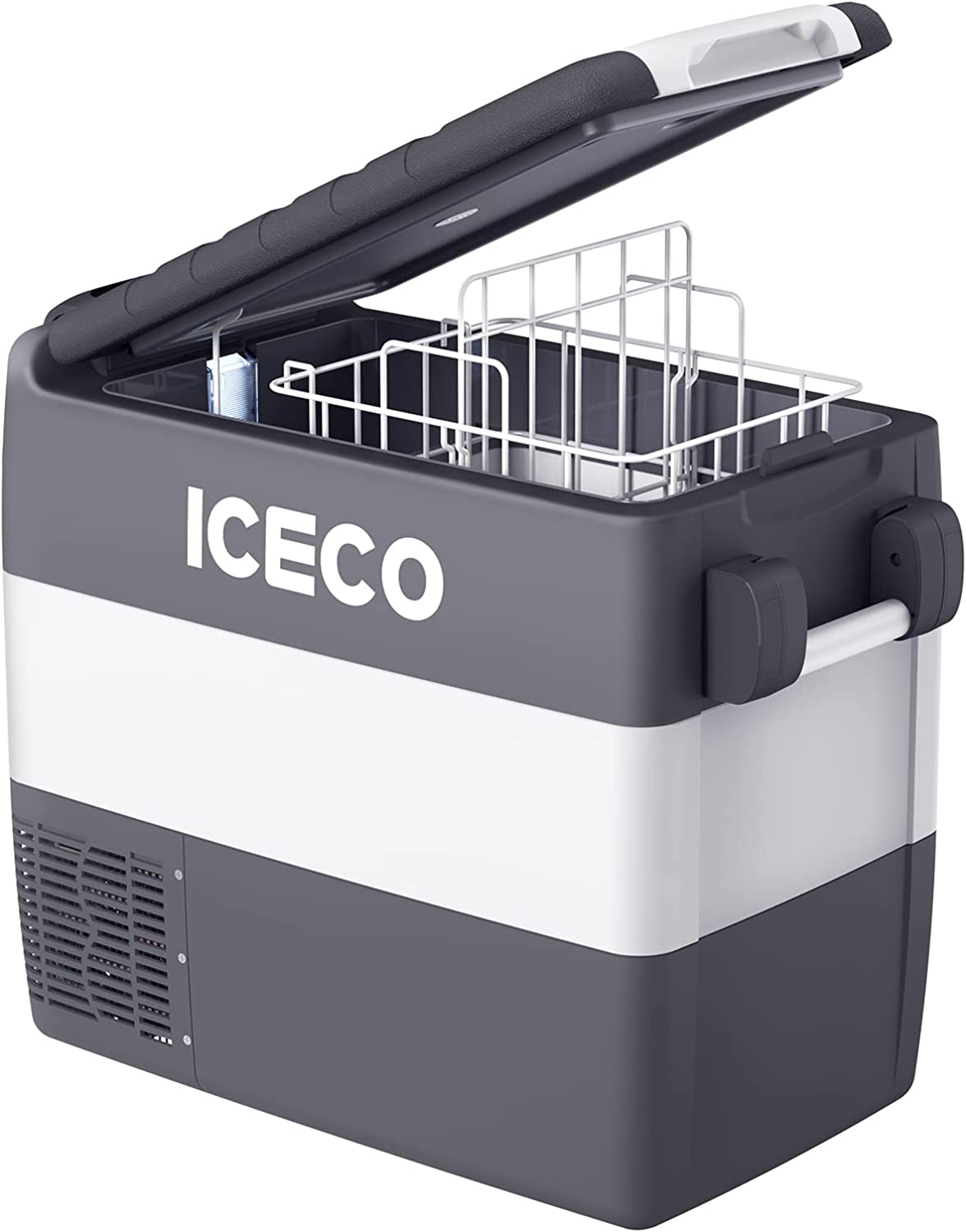
We travel with a backup refrigerator that is hugely useful, depending on our mood, as a wine/drink cooler, holding area while we defrost the big fridge, or, in a pinch, a second usable refrigerator in case the big one fails.
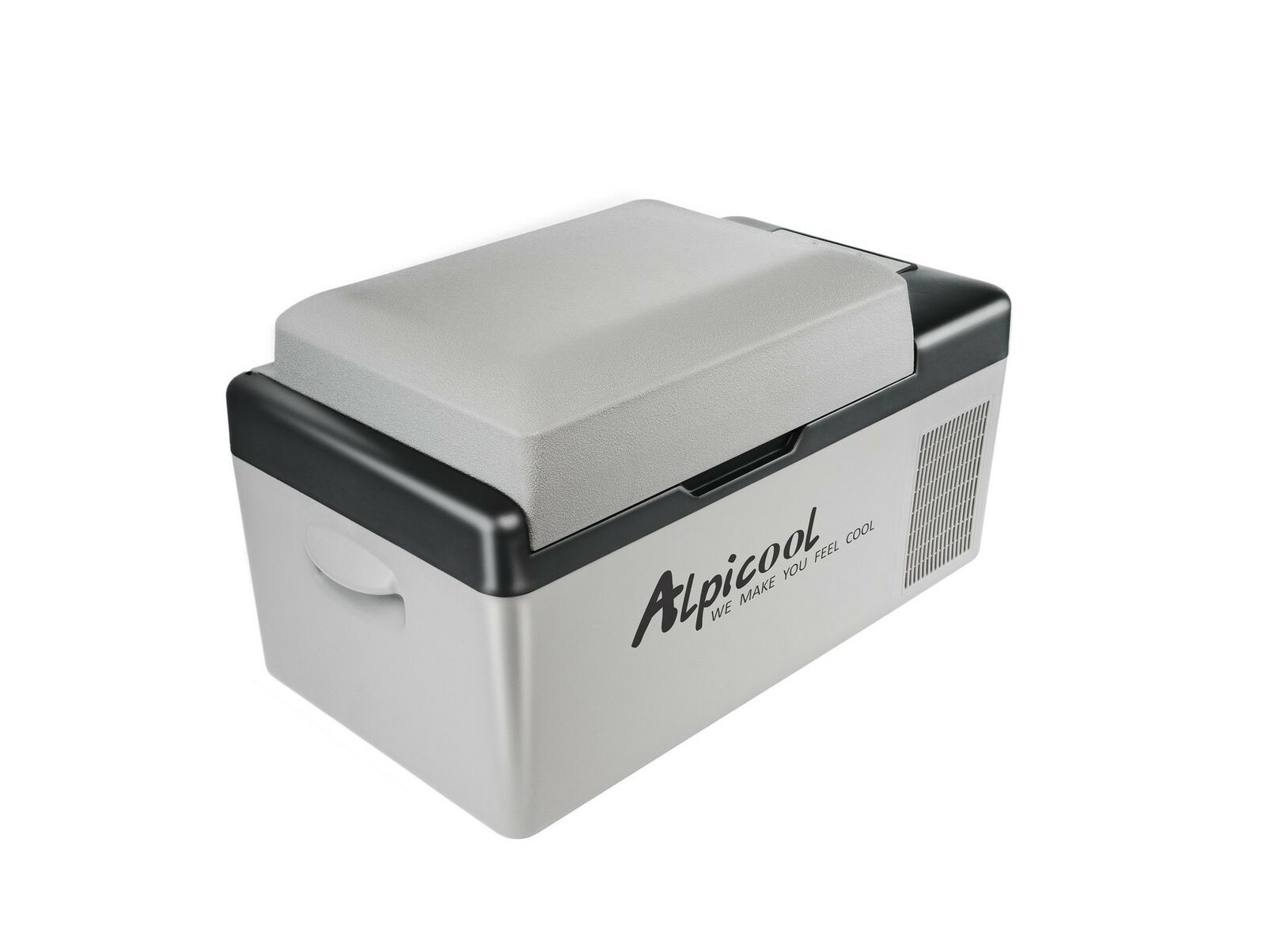
We previously had an Alpicool Refrigerator which works great and fits behind the drivers seat.
Super nice, but the thing was tiny. So last summer we upgraded to this relatively massive once that runs off a Danfoss compressor just like the big boys. You can run it as a refrigerator or a freezer (but not both).
Its relatively massive at 50 liters – in a pinch, enough to get by on for weeks without spoiling a vacation.
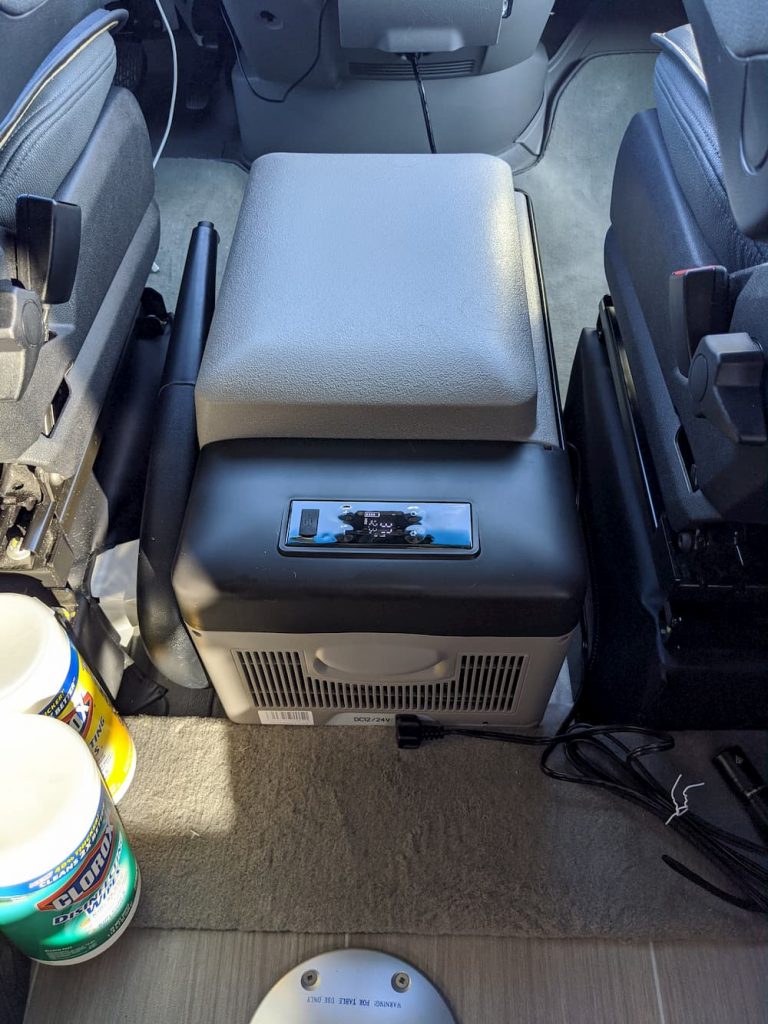
And yep, it still fits in the dead space behind the driver’s seat.
We used this all summer and man! was it neat. You can fill it with warm wine or drinks and they are cold before you know it. Also used it while defrosting the Isotherm.
I can’t say enough good about it. We ran it nonstop for months. Its quiet, uses just a few amps, and worked great all summer.
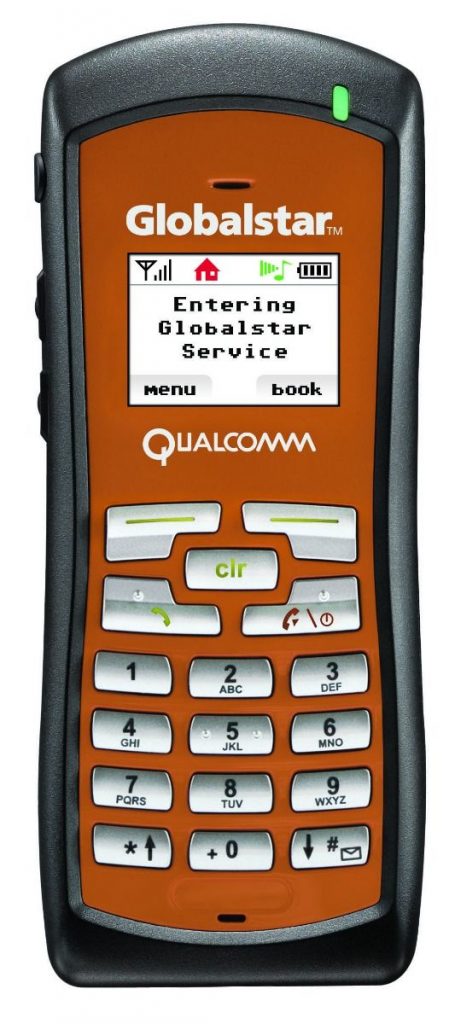
I’ve had a Globalstar GSP-1700 sat phone for a long time.
Globalstar has a tortured history. Once a great service, it experienced some satellite failures and the service went to hell. It was so bad that to get the phone to work you had to consult a chart for when the next working satellite would pass overhead in your area (which might be just a couple times a day).
However, I bought my phone in 2012 when service was the worst because it was a great deal!
It was still useful for the intended purpose. You could go wilderness hiking and have emergency communications, albeit just once or twice a day – for a fantastic price – almost free.
Roll forward to 2021, and Globalstar had some successful launches and the service is pretty reliable now. However its a lot more expensive and my 10 year old phone seems to have an issue where sometimes the display is buggy. Also as I near retirement its less urgent to have emergency phone service everywhere I go.
All I really need now is a text communicator so if I, say, twist my ankle in the middle of nowhere – I can summon help.
These new generations of satellite text communicators would seem to be great for just being able to send messages, and maybe even non-emergency ones.
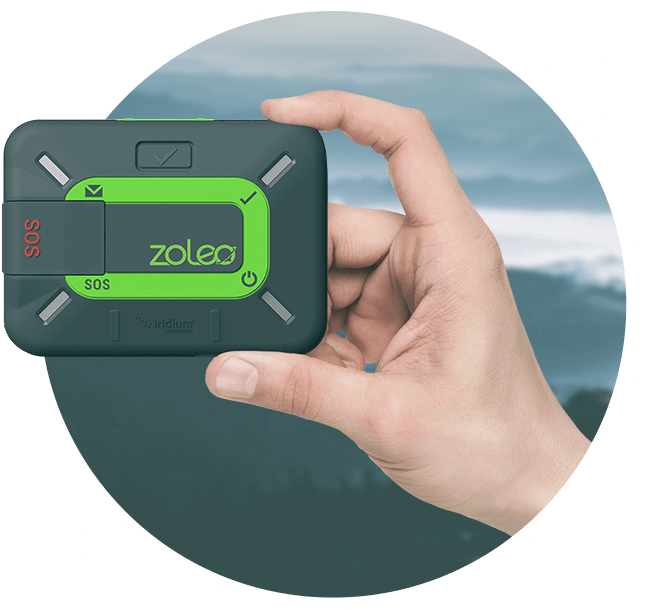
So I bought the Zoleo, Amazon link below. What I like about this device is that its waterproof, so I can strap it on my backpack (It has an included carbiner for that purpose) or even place it on the RV roof.
Because it uses an app on your phone, connected by Bluetooth, the Zoleo device is like a brick – you just need to give a clear view of the sky. And rather than a painful keyboard and a cumbersome interface, they did away with the interface entirely and just give you a friendly app.
It uses the Iridium satellite network which is much better than Globalstar’s.
If I want to nitpick a little, the setup is a bit cumbersome. I installed the app and it immediately was able to see and even update my Zoleo, but then it started giving me vague error messages of activation failure. I eventually figured out to go to their website, sign up, pick a plan, and go through a cumbersome process of registering including typing in the long IMEI number.
It was actually pretty quick and easy, but it sure would have been nice if the app was a little more refined and just prompted you for registration instead.
After that is seems to work great. I picked the middle plan – $35 monthly for 250 messages, which seems like a great deal. Also I can suspend the plan while home and pay just $4 monthly.
Zoleo is a bit unique in that they supply a SMS number and an email address, and you can receive messages both ways. Also if you do have cell service or WiFi it skips the satellite and uses one of those instead.
To further nitpick, a lot of bad reviews mention that there doesn’t seem to be any way to tell how many free messages you have left before the overages start. Not a big deal to me, but that info should be provided.
Of greater concern, there is no way to tell if the Iridium satellite connection is actually working. Although I did some preliminary testing outside, I assume my texts went over terrestrial communications. So I’ll have to further test by disabling WiFi and Cell data before heading out west this summer to actually test in the wilderness.
But overall, I love this thing. It just works and will give me reliable 2 way communications virtually anywhere.
The battery life seems excellent, but that is achieved because the default setup includes a long “polling” interval of 12 minutes. In other words Zoleo only checks for messages every 12 minutes. Its adjustable though, and when necessary you could quickly set the messages to be more instant at the cost of reduced battery life.
The two other cool features are an SOS button you can click when everything else fails, a check-in button that will notify up to 2 people where you are, and a weather report you can pull from the app.
I’ll update this review in the next couple months when I wilderness test it, but I have every expectation this will be replacing my satellite phone!
Update: July 2021
We went for a trip out west and this thing is unbelievable. Had texting and weather reports the whole time by satellite. When parked I balanced it on the screen frame below my skylight and it worked perfectly.
I can’t say enough good things about it – it really came through for us.
A while back I bought an RV refrigerator temperature monitor. That actually worked quite well, and was cheap and reliable.
But, I’m always wanting more! The old monitor would record the high and low between resets, and the current temperature, but that was about it.
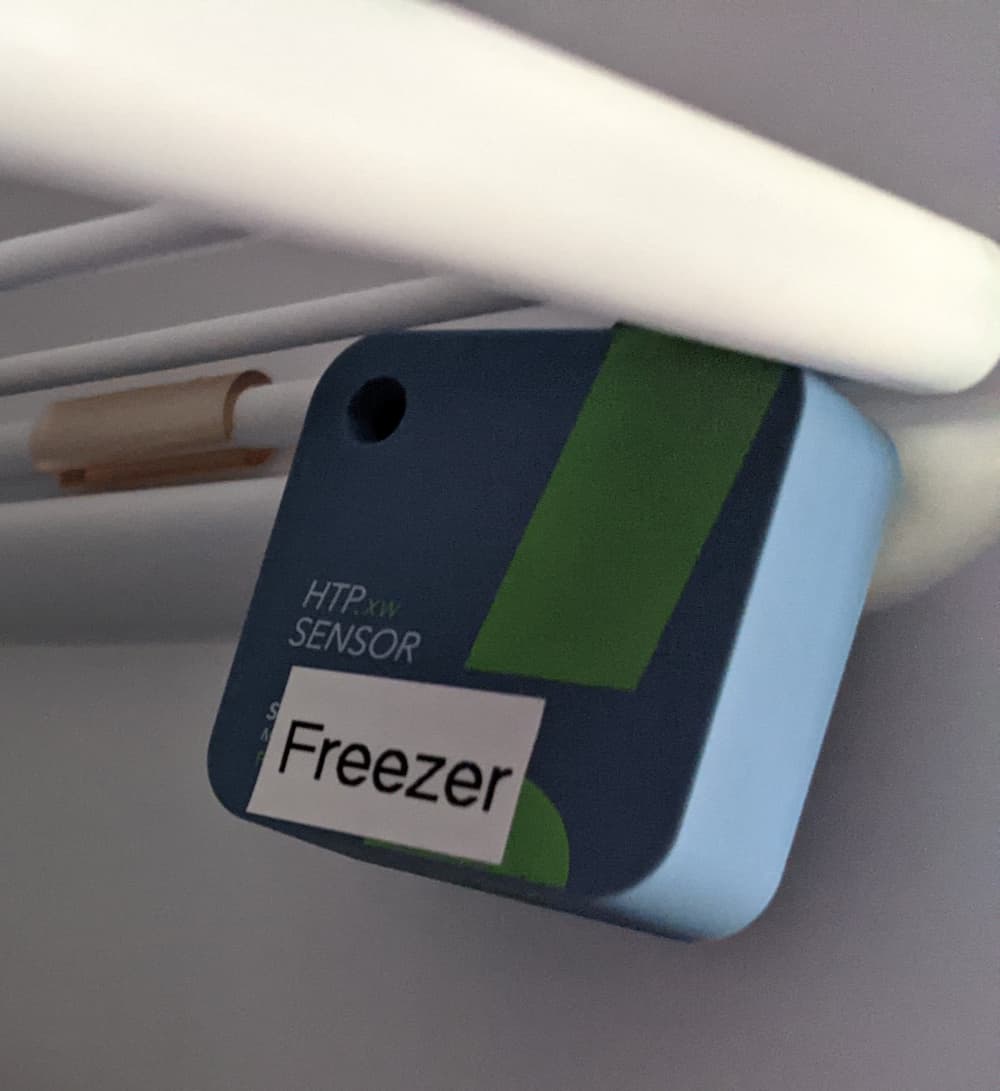
With my new RV compressor refrigerator, I’m wanting more information. The SensorPush line of stuff solves that. These little cubes transmit Bluetooth data and retain 45 days on the device.
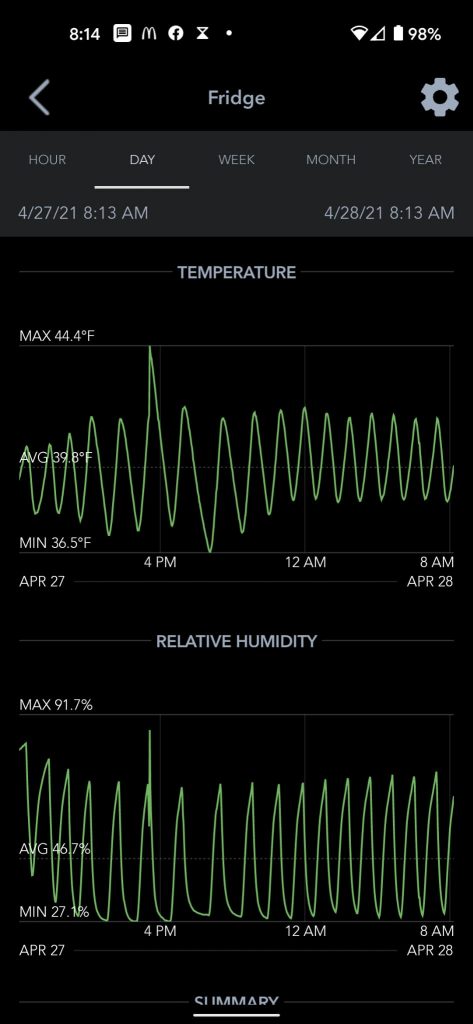
So that means I can quickly review the fridge temps on any phone or tablet. Not just the high and low; but for the first time I can now see graphs that will also infer the run time and how often the refrigerator is cycling:
You can infer from this overnight graph that the refrigerator is cycling on and off with around a 50% duty cycle. This sensor is located near the door in the warmest part of the refrigerator. The other one is in the freezer near the front, and looks similar, with ranges from about -5 to 12 degrees F.
For an RV refrigerator this is important stuff to know. I can tell, for instance, if the fridge is just barely keeping up running 24 hours or its just cruising along like it is now.
Ar first I was thinking I might want the WiFi gateway; but it seems unnecessary. Each SensorPush HTP.xw Wireless Thermometer retains its data for 45 days, and the Bluetooth seems to work from quite far away, so your phone will “catch up” when you return.
I chose the SensorPush HTP.xw Wireless Thermometer – which is their most expensive and contains sensors I don’t really need (like barometric pressure) because they claim its their best and most accurate, but the cheaper ones probably work pretty well too.
This simple gizmo makes it a lot easier to keep an eye on the fridge, and the temperature is spot on what my temp gun records.
Stuff happens, and just about anybody who travels in an RV extensively will have refrigerator problems sooner or later.
Or maybe you just want a truly tiny refrigerator you can use just about anywhere.
In my case, it was a refrigerator failure. While waiting for parts I needed something to keep some minimal items cold.
Unlike a lot of the junk ones being sold at the low end, this is a true compressor refrigerator. Meaning you can run it as a freezer or refrigerator (but not both).
I didn’t test the freezer capability, but just knowing you can run it down to 0 degrees F or so means holding 35 F should be a piece of cake.
And it actually fits between our seats.
It includes both a 12 V “cigarette lighter” adapter and a 120 V power supply.
So far its working great. You have to manually switch power supplies. Our RV does not have a 12 volt plug in the coach, so temporarily we are running it off the chassis battery while parked or driving and off 120 volts while we have hookups. Thats not ideal but good enough for an emergency. (Maybe now I will finally install a 12 volt jack in the coach!)
Note: If plugging into your chassis jack like I am doing while driving or briefly parked, be extra cautious. I have no idea but if I assume this is pulling 2-3 amps and will quickly kill your starter battery.
I am guessing my starter battery is something like 50 amp hours so a load of 2 amps will VERY quickly deplete it.
There are various aids onboard this refrigerator to keep from doing that including an “ECO” mode, a voltage monitor, and a low voltage shutoff.
Just be aware its something to keep an eye on if you are camping for more than a few hours with no power.
So far I can’t say anything bad about this. The Bluetooth app actually works but is prone to hanging. The temperature set seems within a few degrees of the actual temperature.
Over a couple days set to 35 its seems to hold the temperature with minimal running. I haven’t tracked the power used and can’t speculate how long this baby will last.
For (roughly) $200 I can’t go wrong. There is more information and some helpful Amazon reviews at the link below.
Update: January 2021
Well as it happens I had to leave my refrigerator in Ft. Lauderdale for repair for a month, so I got to try actually using this little fridge.
I was quite impressed as it worked perfectly the whole time. I discovered it actually fit behind the drivers seat and out of the way, and serves as a perfect trash can stand when not in use.
We stuffed an amazing amount of food into this for several day camping trips, and I definitely plan on carrying it permanently as a backup even when we get the fridge back next week.
The thing just works.
Update: June 2021
Looks like it was superseded by a newer model which I also linked in below:
So this is one of those newfangled devices that you have to stop and explain as it didn’t exist just a year or two ago.
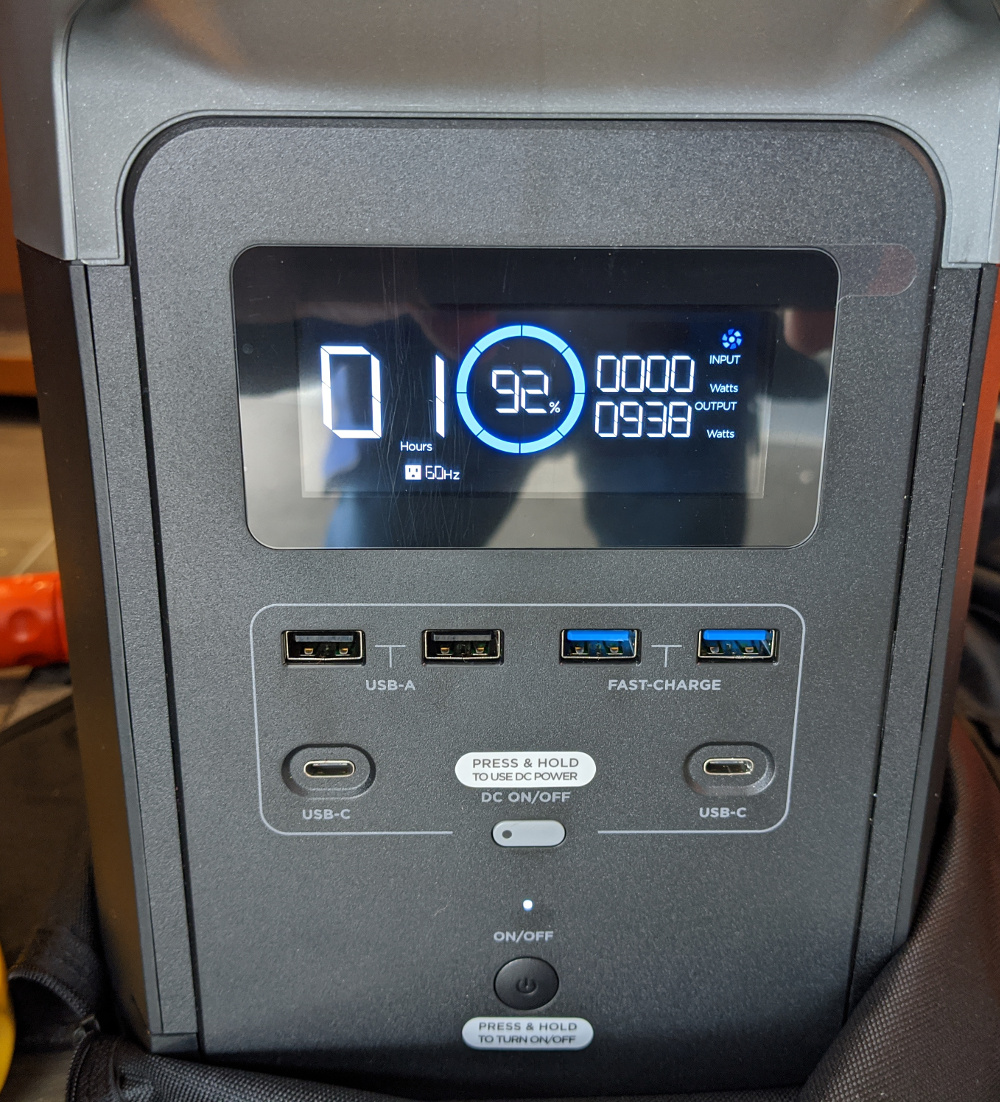
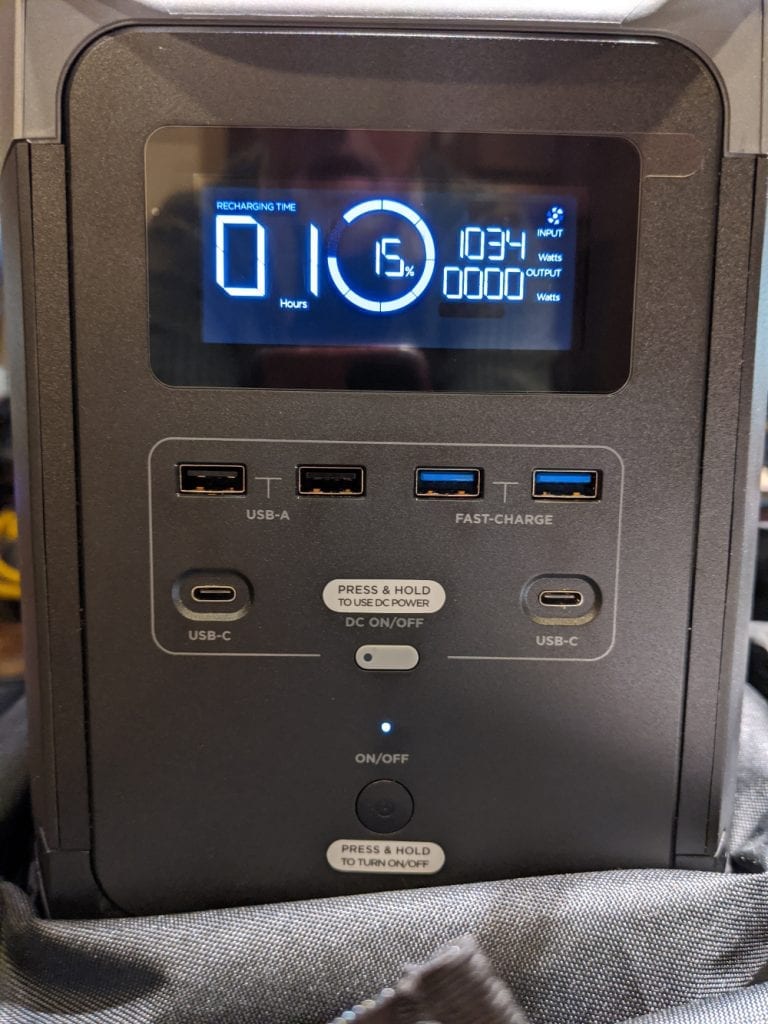
It’s a Lithium “generator”, meaning it works like a portable generator only it uses a battery instead of gas. They haven’t made huge inroads yet, because for a homeowner a typical honda or even a cheap clone gas generator will run circles around it in terms of output. You can pour gas into a regular generator all day. With these once your battery is exhausted thats it.
But this one breaks new ground though. Specifically, its 1260Wh. At around 13 volts that about 100 amp hours, or about as much as one Battleborn lithium battery. Its can output 1800 watts, i.e., just about anything you can gang up on a 15 amps circuit.
The other amazing thing is you can recharge it in like an hour and a half.
So think of it as a lithium battery, strapped to a handle and an inverter and a charger, and you get this picture. So what can you do with it? Plenty!
As a home backup generator, it has some use. You can power a refrigerator for 10-20 hours for example.
To be able to take power tools places you normally can’t. From time to time I want to operate a table saw or similar someplace without electric.
Its real value for me though, lies in its RV utility. I have two main things in mind:
My RV is stored in a storage facility and lacks power. Even with the battery switched off it has a parasitic load. And even if I could trace that down, I am always there tinkering with it and using up power. I used to have to run the generator frequently to top off the batteries.
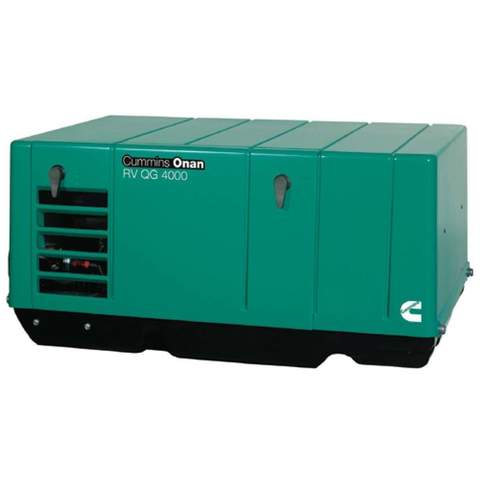
Don’t believe the Onan line that the more you run your generator the better; that’s a load a crap. Exercise it twice a month and use it just when you need it and it will last almost forever. Once you get a lot of hours on these they are finicky and expensive to repair, so I prefer to use mine mainly as needed on the road.
So now I just pull out my shore power cord and plug it into the Ecoflow to recharge the RV. (Note: If you try this be sure you don’t have or bypass a built in EMS protector. They don’t like to run off this kind of a generator!)
The other main use is, when traveling as a backup battery. Particularly in my case, now that I have a compressor refrigerator, there is a constant demand for power.
With only 2 coach batteries, even with lithium, there is not a large margin for error. I’ll carry this with me and if I run low I can top off the RV anywhere, even if I’m in an area where generators or banned or restricted.
So far its working fine. I do have a couple complaints.
First off, this is a young company just coming up to speed. Its universally said that their customer service is a disaster. They don’t answer the phone and open emails days later, if at all. While I appreciate its a couple young guys whose kickstarter campaign just went viral, it really is time to hire some help guys and stop trying to do everything yourselves.
Fortunately I haven’t had any issues yet.
Second, like many portable generators it lacks any ground-neutral bonding. This means it completely lacks the ground plug. (Some “contractor” generators bond the neutral to ground and I wish they all did this.) It seems safer and more convenient to me.
Why don’t the rest? Well, if you have a big generator and you are running your whole house with it, your main panel already has neutral bonded to ground, and you only want one bonding, hence most portable generators have a floating ground.
But realistically, nobody is going to use this as a whole house generator. They should have just bonded it at the generator.
So far I am really thrilled with this thing. It will be a great way to carry a huge amount of power. At 30 pounds its easy to carry even with one hand.
About the only negatives I can say about it is sometimes under load its inverter has a bit of a whine. Not terrible.
The other thing is, its Lithium Ion, not LifePo4. The claimed lifetime is 800 cycles but by then its been reduced to 60%. So just taking a wild guess I’m thinking maybe 400 cycles would leave you at 80%. I doubt I will charge it more than once a week (if that) so it seems an acceptably long life of almost 8 years even with weekly use.
Somebody on the internet pointed out that for many RVs sold with a couple of lead acid batteries this doubles the useful capacity.
June 1 2021 Update:
Still love this thing! When we had an extended power failure I offered it to a neighbor. (We have a natural gas backup generator).
This comes up online so often online that arguably its comparable to, “Cats or Dogs?”
But not really. Each has their own advantages and disadvantages, so its worth considering what you plan to do with it.
Its important to understand that RV diesel generators are not the same thing as the legendary commercial diesel generators that seem to last forever. A lot of folks think of that, but these are a breed apart.
Stationary diesel generators are slow turning 1800 rpm engines, cooled by water like your car. Some are even rated “prime”, as in, meant to run continuously!
RV diesel generators are not the same thing at all. They run at double the speed – the same speed as propane generators, which also turn at 3600 rpm, so they don’t have the same reliability as stationary diesel generators.
Does an RV diesel generator really last longer than a propane generator? Well, nobody really knows. The block is thicker and heavier, so maybe. I think the conventional wisdom though is that “costs per kw hour” may be about the same as propane though, because diesel is more expensive to make and more expensive to service. That’s my guess too, but not based on any scientific evidence.
So on total ownership costs per kilowatt-hour, possibly around the same.
Exhaust emissions – and the is the big one – are completely different. Propane generators are clean burning (relatively). (Well, as much as you can call any fossil fuel clean burning anyway)
Their exhaust is near odorless. It will still kill you if it leaks into the RV (carbon monoxide).
Diesel on the other hand, is absolutely horrendous. Its so hazardous that diesel autos were effectively banned for many years in the USA. Diesel is back now on autos and trucks, but with tens of thousands of dollars of pollution controls. There are no such regulations on diesel generators, so they spew hazardous and carcinogenic fumes.
Not only is diesel exhaust from a generator extremely harmful, but it has an obnoxious smell that can travel quite a way. I wouldn’t camp nearby one because of the health risks.
So why do lots of RVS have diesel generators, if they are so deadly? I dunno. I used to have a small horse farm and for years I had a diesel lawn mower and backhoe, and never thought a thing about it. Its all relative I guess. Now that I am 64 and facing maybe only another 20 years of life, I guess I am more risk averse.
Diesel generator fumes are far more offensive and noxious than propane.
Diesel is potentially more convenient if you already have a diesel RV. Propane is notoriously a pain to fill. Its harder to find and there is often a wait.
One thing to consider for sure is that most people with an RV don’t really use their generator very much if at all beyond the monthly required exercise cycle. And long term, generators may be fading from RV history as more people opt for a Lithium battery bank instead or even a propane fuel cell.
For my money, a propane generator is overwhelmingly the best choice today. It’s cheaper and healthier, and less obnoxious to nearby campers (and us).
Lithium battery banks are not really ready for prime time yet in my view. They have a lot less punch (Kwh) than generators, and require a massive solar farm to recharge in a short time. My small RV probably will never have enough roof space for that option.
Note that everybody’s camping is different. If you rarely if ever dry camp and just need a generator for that occasional event or to run the AC for 2 hours, a Lithium bank may be just fine. Again, many RV owners never use the generator anyway.
On the other hand if you are using your RV as a remote cabin for the summer diesel might be better (if you can stomach the stench) as you can truck in jerry cans of fuel with ease for refills.
So each option ultimately has their place. For us camping is about a peaceful stretch in some remote woods where we can small the fragrances of nature and so diesel is out of the question, a battery bank lacks enough punch, and the propane generator is just right for now.
Once in a while something comes along that really is a good deal, and this is it!
Visible.com is a new kind of phone service that uses Verizon towers for an ultra cheap $25 a month, no taxes or fees.
Note to get the $25 a month discount you have to join a so called “Party Plan”. If you don’t have 4 people you can just join my party! That is because unlike other services there is no information or data shared between “party” members. Its just a marketing gimmick. So to sign up, first go to Signup for Visible. After you are signed up, to get the $25 deal click on Join My Party. After I approve you (and I will!) its $25, unlimited.
Most people who have been RVing for a while know that there is only one carrier that works reliably out west and in rural areas – Verizon.
On our onboard router we had both Verizon and AT&T sim cards. In areas with strong signals (towns or cities) AT&T actually was often better than Verizon.
But out in the middle of nowhere most of the time we could get a signal with Verizon but not AT&T.
Of course there is also Sprint and T-Mobile, but they generally don’t work in rural areas at all.
There is a lot of confusion on mobile plans, and some of this is caused by the carriers on purpose, but let me start with some definitions.
Unlimited – This is exactly what you think it means, meaning there is no limit to the amount of data you can use. That said, it doesn’t mean you are going to download an unlimited amount, because of:
Throttle or Rate Caps – Some plans throttle all data from the first byte to the last. For example most Verizon plans rate cap your mobile hotspot (tethering) to 600 Kpbs or something like that after 15 or 22 gig. Most streaming apps can’t run over that low of data rate (although netflix will with an albeit really crappy video quality).
Network deprioritization/Network management – this is just a fancy way of dividing data streams into first class and second class routes. So if you are on an overloaded tower and have a “second class” data packet (prepaid, for one) then you go behind the premium subscribers who pay more. Most of the time, this is not a big issue as carriers try not to have too many overloaded towers, but it does happen at peak times in some areas.
Hotspots or Tethering – This is when you can use your phone to create a hotspot that other devices (say your Apple TV or Roku) can use. In other words it turns cell service into WiFi. Note that there are also stand alone hotspots or routers, but the Visible sims only work in phones.
So most people in RVs tend to want to use a lot of data streaming video and quickly discover that their “unlimited” plan in their mobile device or hotspot, while it truly is “unlimited”, is useless for that.
You can surf the web or read email at 600 Kbps but you can’t binge watch episodes of Game of Thrones.
If you call Verizon and ask for unlimited uncapped service it doesn’t exist anymore in any plan.
Until now, sorta.
Visibile.com is a new MVNO (Mobile virtual network operator) owned by Verizon. That means they use Verizon towers – think of them as a reseller.
It’s exactly like Cricket Wireless, which is owned by AT&T.
So Visible has (for now anyway) an unlimited plan. It is not rate throttled except for the hotspot which is capped at 5Mbps. Video is limited to 480p which is sorta OK (but not the greatest) – but a lot of plans do that too.
However (drumroll) the hotspot is not capped at all (beyond 5mbps and 480P limitation).
(Note that when you get your sim card, its a common complaint that it is capped at 5Mbps, but a quick chat with Visible fixes this.)
Which means you can set your phone up as a hotspot, create your own WiFi, and connect your Roku, Apple TV, etc, to Visible.
So that means you can binge watch all episodes of Game of Thrones afterall.
I have been using it for a while. So how do I like it so far?
The good. $25 is dirt cheap, and I can cancel my RV service, just using my mobile hotspot in the RV. It’s still Verizon towers, so it mostly works as well everywhere as regular Verizon. So now I have Internet for free in my RV.
The bad. 480P video doesn’t look like 1080P (but then again its not that bad either and most of the time I don’t notice any real difference.) Lots of plans limit to 480P, so this is not a unique thing. Also they don’t support a lot of phones. Apple is OK, also Google Pixel, and a few others. Lastly you are limited to one hotspot connection at a time (usually fine as it will be your TV). Also, with Visible you do not get 3G or roaming access – Verizon LTE only. In some areas you may not have signal where regular Verizon would, but this should be a shrinking area as 3G is disappearing fast. Its notable that the Visible coverage map is similar to the Verizon coverage map, but if you look carefully it is not quite as good.
(Although the hotspot is limited to one connection. You can bypass that by “front ending” with a router, but for many people in an RV its fine without doing that.)
The ugly. The ordering process is ugly. Just look at their facebook page and the zillions of complaints.
But once we got the sim cards it was mostly smooth sailing. So the bottom line is, this is by far the best plan available in America today in my opinion.
So it turns out many RVs (and for sure our Sprinter) have pretty massive “vampire” loads. If you park my van, even for a fairly short period (say 10 days) you could come back to a battery that’s depleted.
That’s because the house charger will not charge the chassis battery from AC, and the chassis has small drains that add up over weeks.
You can buy a device that does charge your chassis battery from the house.
Or you can do as some people do and pull the master disconnect chassis switch on the floor. That has its drawbacks though. You are supposed to remember to wait a certain period of time to let the computer do its thing before pulling the switch.
And your AGM battery may still go dead in a few months.
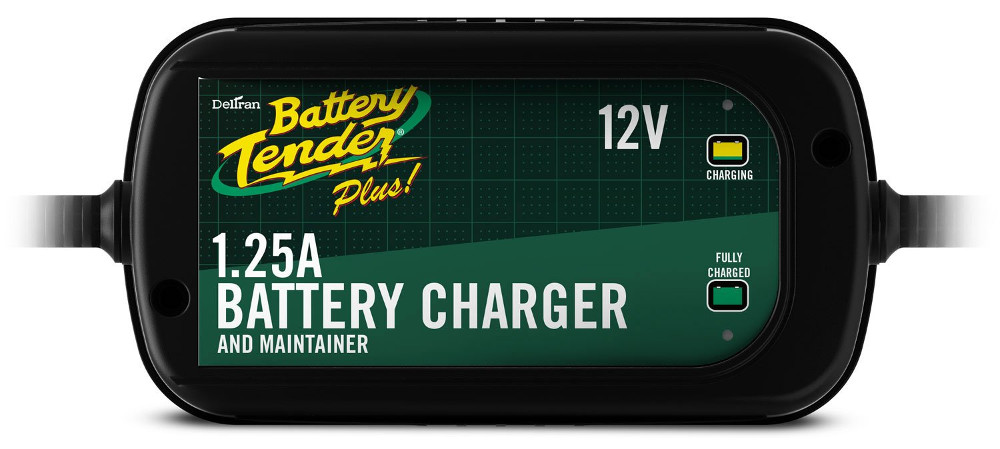
So for us this was a much better solution. Just plug a small battery tender in the lower cigarette lighter socket that’s always on, and no more worries.
I’ve been using battery tenders for years, once with a motorcycle for almost a decade, and the multi stage charger really babies the battery.
We turn this on whenever we aren’t returning for more than a couple days. Simple, and it doesn’t matter whether you return the next day or 4 months later.
Sooner or later you’ll need a water jug while camping. For instance while camping at Yellowstone with no hookups we occasionally used the nearby spigot to top off the fresh water tank without moving.
Most of the time though, its unneeded so this was the perfect solution. It stays folded 99% of the time and then we unfold as needed.
After using it, we hung upside down in the shower overnight to be sure it was 100% dry before folding again.
I’m pretty sure if you use this daily and fold it often, it won’t hold up for years, but with our occasional usage I expect they’ll last a very long time. So far we have used just a couple times and they really did the job.
When you travel in a 25 foot RV, real estate is scarce. We previously had a small toaster oven. But even that little guy required a generator start and had to be stowed in an outside department.
So back to the stone age. This little thing makes great toast in 30 seconds.
Just sit it on the propane burner right after the eggs finish.
It’s more than 10 times faster than our toaster and no plug needed.
We learned quickly that Bottled water is an unwanted and expensive chore.
We are water bigots and at home drink RO (Reverse Osmosis) or bottled water to get rid of chlorine or other chemicals
But then we realized we already have double filtration in the the RV (house filter + external hose mounted filter) so pouring everything through the Brita gives us a third stage filter.
US water is already pretty good. The water from the RV water tank tasted great from the pitcher after being triple filtered and nobody died.
Previously we traveled with multiple gallons of bottled water and were constantly restocking so this little Brita Pitcher really simplified things.
We ended up unloading about 20 lbs of water we normally carried and just rely on the RV fresh water tank.
Ok this is an absurdly simple item, hardly even worth mentioning…
I learned of it while watching the YouTube channel “HoboTech”. This chronicles some middle age guy who gives up his dayjob, converts an old RoadTrek, and travels the country.
In between, he offers a lot of great tips for the DIYer.
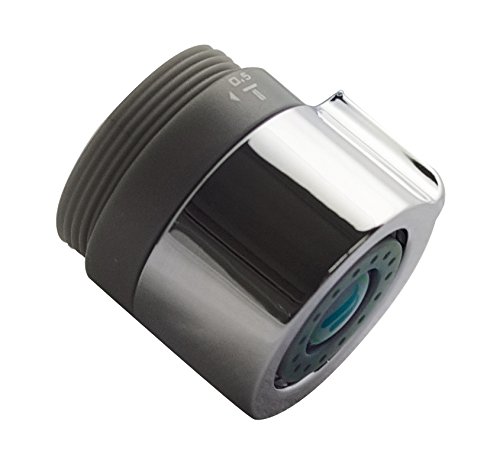
So one of his recommendations was this little aerator for your kitchen faucet. You rotate it through 3 clicks to choose the amount of water.
The default setting for me of .5 gallons a minute saves a lot of water and gives a nice aerated stream instead of the normal faucet which comes out more like a hose.
I suppose the downside is – if you wanted to fill a water jug or something it’s completely useless, you would literally need a funnel. But we don’t drink from the house water supply, so this little thing is perfect for us.
My very first RV purchase once we finally received ours (the 2019 Leisure Travel Corner Bed was one year on order) was an air compressor. I think it’s the most essential RV accessory.
A couple reasons. First, maintaining proper air pressure is extremely important. It will have an effect on the safety, handling, and tire life obviously.
The other reason though, is that some RV’s (like mine) don’t even have a spare or any easy way to mount one. So in my case even a slow leak in the middle of nowhere could result in some pretty severe travel disruption and headaches I’d rather not experience.
So the air compressor, besides allowing me to topoff the pressure when necessary, could mean the difference between being delayed or not.
Of course, for topping off, you could use public air like at gas stations. I detest those though. More often than not, the air chuck will not fit my inner dually, or is just crappy and won’t seat right. Often you are going to have to turn around your rig to do both sides.
Another consideration is to just use one of the many “el-cheapo” 12 volt air compressors you see on Amazon. They work, but from past experience are loud as hell and take forever (like 20 minutes per tire!) to add any serious air. Some will work at my tire’s recommended PSI (61) but the drawbacks are pretty severe.
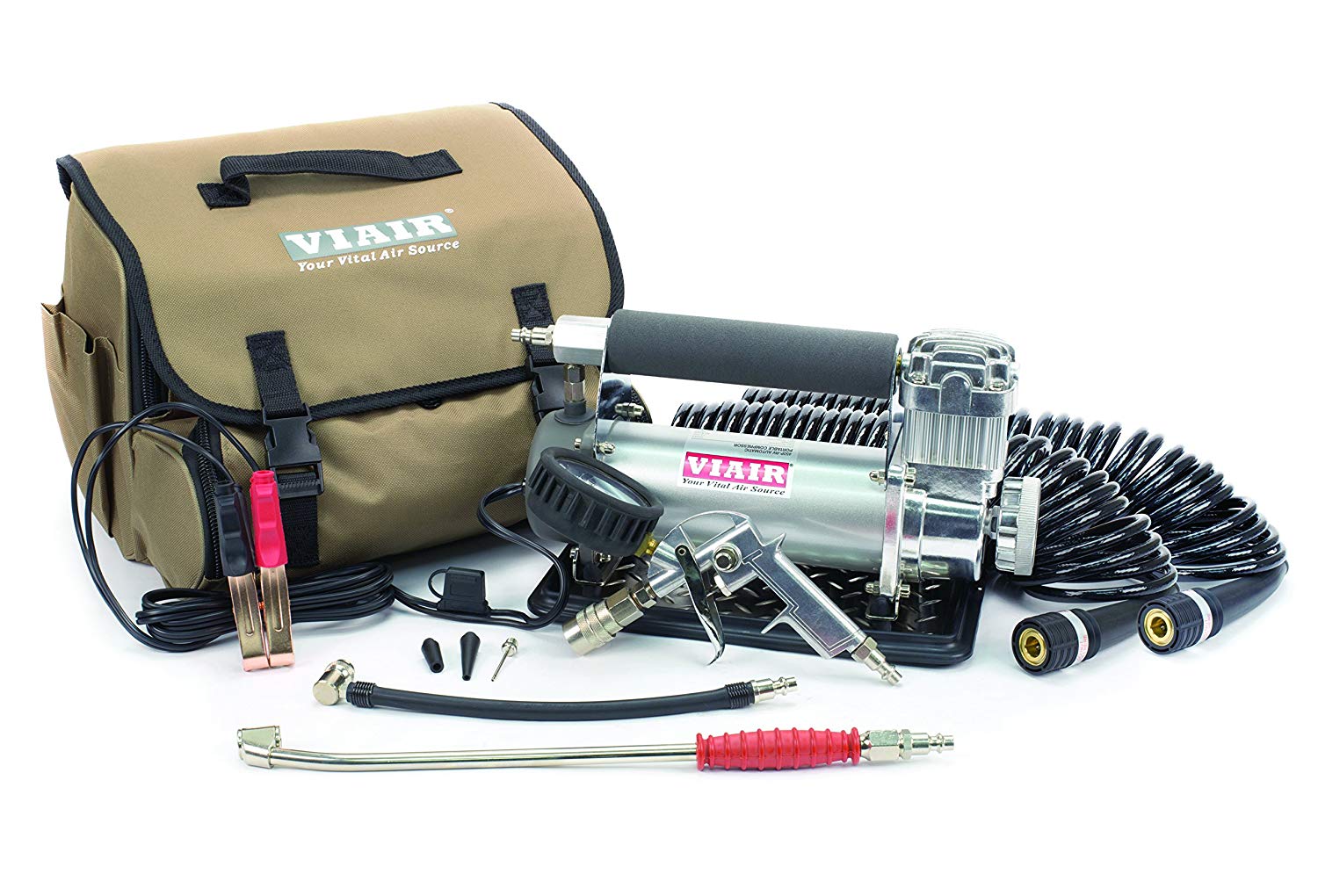
So I went off looking for a real compressor. After a lot of research here is the obvious choice (although not the one I bought!):
The is the cadillac of RV compressors according to most of the people who have owned them. They have a bunch of models, but this one is the continuous duty one that can be used to blow up truck tires literally all day and comes with all the accessories.
Now, the bad news is, you have to open the hood and clamp on for power. The kind of amps it pulls cannot be had from a cigarette lighter plug.
Although they tell you the engine has to be running, most people use them for occasional use with the engine off and it works just fine. The other bad news is, it’s REALLY expensive.
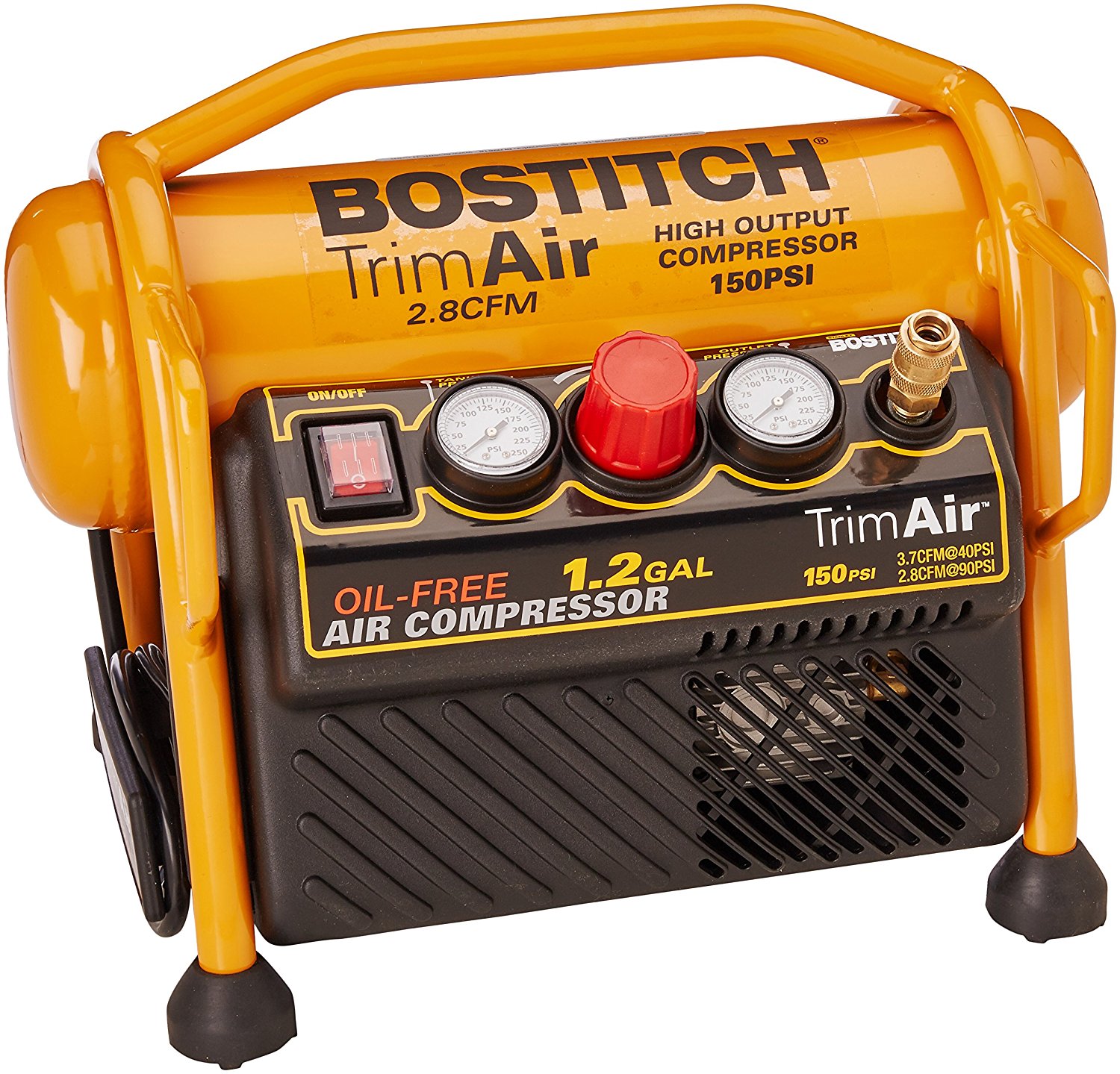
So what I actually ended up buying for my RV was this:
So, this little guy was just about the smallest “garage” style compressor I could find. It runs off regular 120 volts which has its pros and cons. For me it was a better solution. A lot of the time while using it I am going to be parked and have hookups. In an emergency I can use my generator. As a bonus since it has a small tank you can also use it to shoot a few trim nails or something from time to time. It actually only weighs a little more than the VIAIR.
WIth the Bostitch though, it doesn’t come with anything, so I still had to buy the air hose, an inline gauge, and a dually chuck which could reach all wheels. To complete the kit I popped into Home Depot and picked up a couple standard 1/4″ inch air connectors to put it all together.
This way you also end up with something useful you can keep in your garage while the RV is not being used!
Here is a recap of the products I recommend: With the VIAIR you get everything in a kit. WIth the Bostitch I ended up actually buying (love it so far) I had to put together an air hose with the inline gauge and add a dually chuck set to get a smooth one handed fill/bleed operation on all 6 wheels.